
Introduction
Canada is recognized as one of the world’s leaders in modern healthcare, and dentistry is no exception. Over the past two decades, dental technology in Canada has advanced rapidly, transforming the way dentists diagnose, treat, and prevent oral diseases. These innovations have improved patient comfort, increased treatment accuracy, reduced recovery time, and enhanced the overall quality of dental care. Today, Canadian dental clinics use advanced digital equipment, artificial intelligence, laser technology, and 3D printing to provide efficient and personalized treatment.
Evolution of Dental Technology
Traditional dentistry relied heavily on manual techniques, physical impressions, and film-based X-rays. While these methods were effective, they often required multiple appointments and longer treatment times. Modern Canadian dental clinics have replaced many traditional procedures with digital technologies that improve precision and patient experience.
The shift toward digital dentistry has enabled dentists to diagnose oral conditions earlier, create more accurate restorations, and complete many treatments in a single visit. As technology continues to evolve, Canadian dentists are adopting new tools that make dental care safer, faster, and more comfortable.
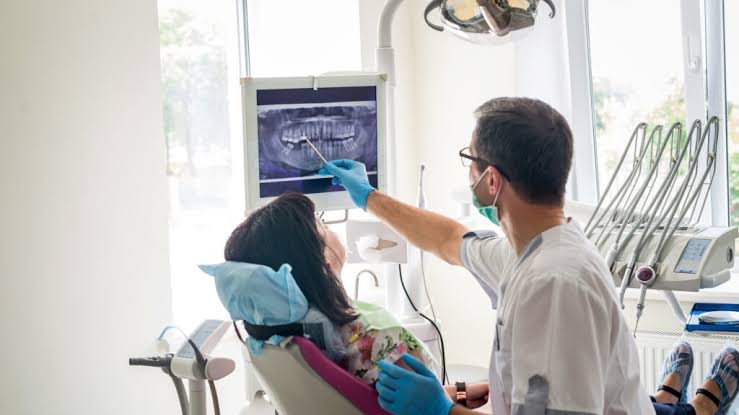
Digital X-rays
One of the most significant innovations in Canadian dentistry is the use of digital radiography. Unlike conventional X-rays, digital X-rays use electronic sensors instead of photographic film. This technology produces high-quality images instantly while exposing patients to significantly less radiation.
Digital X-rays allow dentists to detect cavities, bone loss, impacted teeth, infections, and other oral problems at an early stage. The images can be enlarged on a computer screen, making diagnosis more accurate and helping patients better understand their dental conditions.
Intraoral Cameras
Many Canadian dental clinics now use intraoral cameras to improve patient education and diagnosis. These small, high-resolution cameras capture detailed images of the inside of the mouth, including teeth, gums, and other oral tissues.
The images are displayed on a monitor, allowing patients to see exactly what the dentist observes. This improves communication, builds trust, and helps patients make informed decisions about their treatment plans.
3D Imaging and CBCT Scans
Cone Beam Computed Tomography (CBCT) is another advanced technology widely used in Canada. Unlike traditional X-rays, CBCT produces three-dimensional images of the teeth, jawbones, nerves, and facial structures.
This technology is especially useful for:
- Dental implant planning
- Wisdom tooth removal
- Orthodontic treatment
- Root canal therapy
- Jaw disorder diagnosis
The detailed images help dentists perform procedures with greater precision while reducing the risk of complications.
CAD/CAM Technology
Computer-Aided Design and Computer-Aided Manufacturing (CAD/CAM) has revolutionized restorative dentistry in Canada. Using digital scanners and specialized software, dentists can design crowns, veneers, bridges, and other restorations with exceptional accuracy.
Many clinics have in-house milling machines that manufacture ceramic restorations on the same day. As a result, patients often receive permanent crowns in a single appointment instead of waiting several weeks for laboratory fabrication.
This technology improves convenience while ensuring excellent fit and durability.
Laser Dentistry
Laser dentistry has become increasingly common in Canadian dental practices. Dental lasers are used for both soft tissue and hard tissue procedures.
Laser treatment offers several advantages:
- Less pain during procedures
- Reduced bleeding
- Faster healing
- Lower risk of infection
- Minimal need for stitches
Dentists use lasers to treat gum disease, remove decayed tissue, reshape gums, whiten teeth, and perform certain oral surgeries.
Patients often experience greater comfort and shorter recovery times compared to conventional surgical techniques.
3D Printing in Dentistry
Three-dimensional printing is transforming many aspects of dental care in Canada. Dental laboratories and clinics use 3D printers to produce highly accurate dental models, surgical guides, orthodontic aligners, retainers, dentures, and temporary crowns.
The technology significantly reduces production time while improving precision. It also lowers manufacturing costs and allows customized treatment for individual patients.
As 3D printing technology continues to improve, its role in Canadian dentistry is expected to expand even further.
Artificial Intelligence in Dentistry
Artificial Intelligence (AI) is becoming an important tool in Canadian dental practices. AI software assists dentists by analyzing digital X-rays and identifying potential problems such as cavities, bone loss, and gum disease.
Although AI does not replace the expertise of dentists, it serves as an additional diagnostic tool that improves accuracy and consistency.
Future AI applications may include treatment planning, patient risk assessment, and predictive analysis for oral diseases.
Digital Impressions
Traditional dental impressions often required patients to bite into trays filled with impression material, which many found uncomfortable.
Today, many Canadian dentists use digital intraoral scanners to create precise three-dimensional images of the teeth and gums. Digital impressions are faster, cleaner, and more comfortable for patients while providing greater accuracy for crowns, bridges, implants, and orthodontic appliances.
Teledentistry
Teledentistry has gained popularity in Canada, especially in remote communities where access to dental care may be limited.
Using secure video consultations, dentists can:
- Evaluate oral symptoms
- Provide professional advice
- Monitor treatment progress
- Recommend emergency care
- Offer preventive education
Although most dental procedures still require in-person visits, teledentistry improves access to professional guidance and follow-up care.
Benefits for Patients
Modern dental technology provides numerous benefits for Canadian patients, including:
- More accurate diagnosis
- Earlier detection of dental problems
- Shorter treatment times
- Reduced discomfort
- Faster healing
- Improved cosmetic results
- Better long-term oral health
- Greater patient confidence
These advantages encourage more people to seek regular dental care and maintain healthier smiles.
Challenges of Advanced Technology
Despite its many benefits, adopting advanced dental technology also presents challenges. Modern equipment is expensive to purchase and maintain, increasing the operating costs of dental clinics.
Dentists must invest in ongoing training to use new technologies effectively and safely. Some advanced treatments may also be more costly for patients, depending on their dental insurance coverage.
However, many dentists believe that the improved quality of care and increased efficiency justify these investments.
Future Trends
The future of dental technology in Canada looks promising. Researchers continue to develop new innovations that may further improve oral healthcare.
Emerging trends include:
- Robotic-assisted dental procedures
- Smart dental implants
- AI-powered diagnosis
- Regenerative dentistry using stem cells
- Virtual reality for dental education
- Improved biomaterials for restorations
- Personalized treatment planning using genetic information
These technologies have the potential to make dental care even more precise, minimally invasive, and patient-centered.
Conclusion
Dental technology has transformed the practice of dentistry in Canada. Innovations such as digital X-rays, 3D imaging, CAD/CAM systems, laser dentistry, artificial intelligence, and 3D printing have improved both the quality and efficiency of dental care. Canadian dentists continue to adopt advanced technologies that enhance diagnosis, treatment accuracy, patient comfort, and long-term oral health outcomes. As research and innovation continue, the future of dentistry in Canada promises even greater advancements, ensuring that patients receive world-class dental care using the latest scientific and technological developments.